The Dangerous “Bypass Trail”
The Crown HOA’s map depicts
a 2-mile long “bypass
trail” that would push the existing Canyonback
Trail off the ridge and onto the steep, unstable and landslide-ridden
slopes above Mandeville Canyon.
The long-established Mandeville
Canyon residential community lies at the toe of the watershed through which
the bypass trail would be graded.
Geologist Jeffrey Holt of Mountain Geology explains that the
existing location of the Canyonback Trail – along
the ridgeline -- is a stable and safe location for a trail. Not so for the plan to realign the trail
to “bypass” Canyonback Road and the
ridgeline by pushing the trail onto the steep slopes above Mandeville Canyon.
The Bypass Trail Would Endanger The Upper Mandeville
Community
Drainage from the proposed “bypass trail”
area is concentrated through various west-trending tributary canyons. This concentrated drainage flows into
the Upper Mandeville Canyon area, which lies at the base
of the watershed. Flood control
and storm drainage systems are located within the canyon bottom near Mandeville
Canyon Road. But these flood
control and storm drainage systems are subject to failure during heavy rains,
especially when filled with debris.
This concentrated drainage has caused flooding and mudflow problems in
Upper Mandeville Canyon for the past 50 years.
The hillsides are both steep and comprised of unstable
landslide remains, fill and loose residual soil. Thus, the soil on which the bypass trail
would be constructed is subject to downhill creep and erosion. The remnants of several prehistoric
landslides have been identified on these slopes. These potentially unstable
landslide remains have been sources of mudflows and debris flows that have devastated
residents of Upper Mandeville Canyon Road in the past. Construction of the
bypass trail would require grading on these unstable slopes. Grading, however, would increase the
already present risk of additional mudflows, debris flows, landslides, and
flooding. The bypass trail would
therefore risk life and property for those living at the toe of slopes along
Mandeville Canyon Road.
Mandeville Canyon Is Already Subject To Severe Flood
Risks
Mandeville Canyon has been designated both
a “Special
Flood Risk Area” and a “Very
High Fire Hazard Severity Zone.”
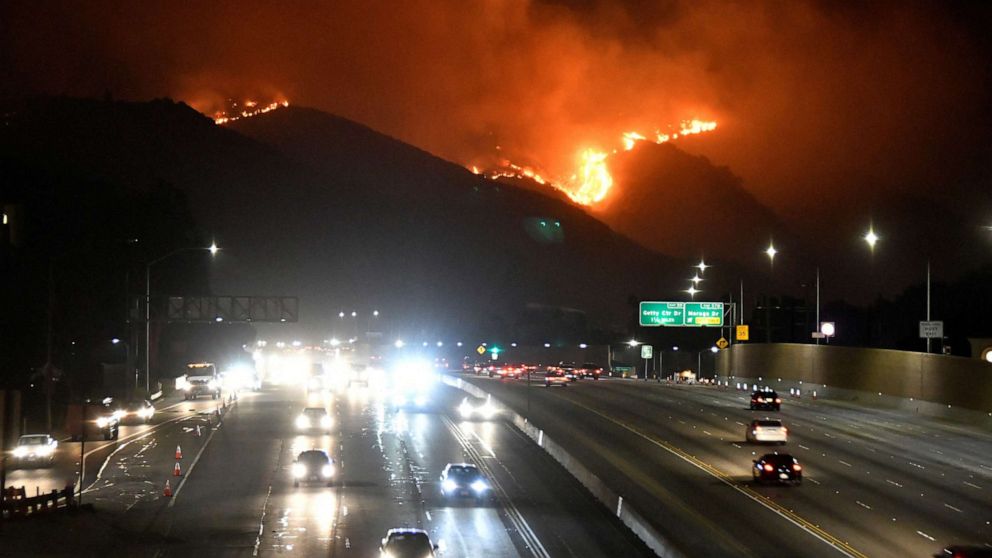
The combination of fire and flood creates an enhanced risk of hillside
stability problems, explained
by Councilwoman Miscikowski:
“Mandeville Canyon is unique in that
rainstorms tend to bring significant amounts of debris down off the hillsides
into the canyon, particularly in years following area fires. In two major rain events in the canyon
over the last few decades, after wildfires in or near the canyon, huge amounts
of water, mud, rocks and debris made its way down the canyon through the
watercourse. For example, in a
flood in the winter of 1980, significant property damage occurred, as well as
loss of life. In many cases, this
damage and loss was directly attributed to the fact that the watercourse,
carrying a huge amount of debris, was channeled into underground pipes, pipes
which could not handle the mass of material coming at once.”
The special dangers in blocking Mandeville
Canyon drainage systems were again recognized by the Councilwoman in a recent
series of important
letters and motions
intended to ensure that residents and public employees protect the integrity of
the drainage system. Disaster
results when drainage channels are blocked. The history of Mandeville Canyon illustrates
the dangers.
When developer issued its Draft
Environmental Impact Report indicating that homes would be built along the Canyonback Ridge, over Mandeville Canyon, residents were
concerned that grading would destabilize the hillsides. But the Final EIR,
circulated on February 22, 2005, dismissed these concerns by assuring residents
that “no
grading is proposed to the south of the existing water tank or on the
slopes that directly drain into Mandeville Canyon.”
But the bypass trail would require grading
in the area “south of the existing water tank” and “on the
slopes that directly drain into Mandeville Canyon.” The bypass trail was not mentioned in
the EIR.
Mandeville Canyon: A History Of Flood-Related Damages
The 1969 Flood. Mandeville Canyon was victim to a major flood in January
1969. The flooding in Southern
California during that storm even was described at the time as the
region’s worst flooding since 1938.
Mandeville Canyon residents suffered greatly. At least a dozen homes were destroyed,
more than 50 residents were evacuated, and one resident was killed.
Mandeville Canyon Road
became a swirling river whose flow was estimated to exceed 15 miles per hour.
In the drainage channel, the flow was an estimated 30 miles per hour. Cars covered completely in debris and
water. Rivers flowed through homes
at heights reaching more than 3 feet.
Hundreds of National Guardsmen, police, firefighters and civilian
volunteers worked to aid in the evacuation. Mandeville Canyon Road above the 2500 block was
impassible to passenger vehicles for about a week, covered in a rock and mud
barrier more than two feet high, with a virtual waterfall pouring over it.
Film director Robert Altman
and his family, residing at 2957 MCR, were completely
trapped on their property, separated from the road by a raging river they could
not safely traverse. Residents at 2969 MCR saw their
piano being carried across the living room in a rush of water, causing it to
crash against a doorway. At the
3100 block, near what was then Robert Taylor’s Ranch, Mandeville Canyon
Road was sheared off to the center divider line by the rushing water. Families beckoned passing vehicles to
take them out of the Canyon.
Michael Riordan, a 41-year
old father of two, was trapped inside his bedroom when mud crashed into his
home at 2077 MCR. While a half-dozen firemen worked
to rescue him, a second mudslide slammed into the home, bowling over the rescue
team and burying Riordan. The
firefighters narrowly escaped with their lives. Tragically, Riordan, the brother of
former Los Angeles Mayor Richard Riordan, was suffocated in the 10 minutes it
took them to dig him out.
The 1978 Mandeville
Fire. The 1978
Mandeville Fire, which began on Mulholland Drive
and spread through the northern borders of the Mountaingate
area before spreading to Mandeville Canyon, illustrates what happens when
erosion, in that case caused by fire, produces debris that is carried by heavy
rains, blocking watercourses and other flood-control devices.
The 1978 Mandeville Canyon
Fire made the Upper Mandeville Canyon area highly vulnerable to flooding,
mudslides and debris flows. Denuded
hillsides play havoc with established drainage patterns. The velocity of storm-water flow
increases due to the absence of diverting vegetation, a problem that also
impairs absorption. New tributaries form along the hillsides, causing water to
flow where it had not before, with unpredictable results.
The vulnerability created
by Mandeville Fire is akin to that created by grading the hillsides above
Mandeville Canyon in an unsafe manner.
As explained by Geologist Jeff Holt, grading can destabilize the
hillsides, causing massive erosion, which alters the flow, blocks the existing
drainage channels and flood-control devices, thereby releasing mud and flood
waters along unpredictable paths – placing lives and property at
risk. The risk of grading the
unstable hillsides is therefore best illustrated by examining the condition of
Mandeville Canyon after the 1978 Fire.
The 1979 Flood.
Moderately heavy rains in March 1979, led to mudslides that caused tons
of mud and rock to wash onto Mandeville Canyon Road, rendering it
impassible. Four feet of debris
collected on and around the road, burying mailboxes, damaging homes, and
stranding residents. Newspaper
accounts of this flood make the dangers clear.
The 1980 Flood. Heavy
rain in February 1980 caused tremendous
flooding. Mudslides covered some homes up to the eaves, buried cars,
stranded residents for days, and destroyed several homes and priceless personal
belongings. Again, most tragically, a Canyon resident was killed when the
hillside behind her Upper Canyon home collapsed. Emergency vehicles could not get into
Upper Mandeville for a week. Those
who lived through the flooding will never forget it.
During the 1980 flood,
waters raged through properties and even homes, destroying much in their wake
as they fought their way towards Mandeville Canyon Road, which had become a
river. The resident just below the
Ranch built a deck and related structure across the watercourse, which ran
through his back yard. Before the
flood, an adult could walk in the channel and under the deck without ducking.
But the rains brought down mud, trees and other debris into the natural
watercourse. Debris carried by the
30-miles per hour flow in the channel began to build-up, constricting the
watercourse. Eventually, branches
and trees were carried to the area, but could not pass through the deck that
seemed so high, so reasonably placed before. Debris built up behind the deck, damming
it. Suddenly, the water streamed
over the watercourse’s banks, driving an uncontrolled river into the
neighbors yards and then into their homes.
Waters raged through homes, destroying all in its wake as it fought
through the homes and into the natural drainage path on Mandeville Canyon Road.
2005 Storms. During
the January and February 2005 storms, flooding occurred in areas where the
drainage system was clogged with debris or diverted by residents who failed to
realize the need to keep all flood-control devices clear. A debris revetment located above 3345
Mandeville Canyon Road had been partially removed before the storms. Consequently, debris that would have
been stopped by the revetment flowed into and filled the area’s drainage
devices, causing raging
rivers to flow through residential properties and down the street, dumping
rocks and debris along the way and onto Mandeville Canyon Road, the
community’s sole means of ingress and egress.
The canyon area flood channels, natural,
man-made and hybrids of both, do a
remarkable job of controlling heavy hillside water flows like these: video
1 & video
2. Flood-related damages caused
by the 2005 storms illustrate the dangers caused by relatively minor channel
blockages and failures. The
proposed “bypass trail” would cause the same type of problem, but on
a much larger scale. Dirt and
debris from the unstable hillsides would clog the drainage paths and fill the
man-made flood-control devices.
An area that is particularly vulnerable to
flooding risks that would be triggered by the bypass trail is along the 3100
area. During the 1969 flood, the
residents of this area were hit hard by mud and debris that clogged the
man-made drainage channels above their homes. The resulting blockage brought
uncontrolled rivers smashing into the homes.
Robert and Rea Westenhaver,
3156 Mandeville Canyon Road, had to climb onto their roof as debris filled the
watercourse, pushing a tremendous mud-flow onto their property. Almost a foot of mud spread throughout
their home, and approximately five feet of dirt was left in the parking area
and courtyard outside their home.
Robert Tebbe, a neighbor and relative, was
almost killed when he touched a metal kitchen counter and was exposed to
electrical shock. He was
fortuitously saved when flood waters carried a huge log careening into him,
thereby separating Mr. Tebbe from the electrical
charge that would otherwise have killed him. The escaping flood waters were so strong
that a detached, single-story workshop on the Westenhavers’
property was turned into matchsticks, with a file cabinet washing down to Chalon Road, about two miles away. It took more than a year to repair the Westenhavers’ property damages.
The current residents at 31XX Mandeville Canyon Road recently suffered extensive
property damages during the January 2005 storms. Their home was “yellow
tagged” by the City. If the bypass trail is constructed, however, it is
certain that the drainage channels above their home, which did not fail during
the 2005 storms, will fill with mud and debris, recreating the conditions
present during the 1969 Flood. The
scope of the problem would be much worse, however, because a two-mile graded
trail along the unstable landslide and fill remains will bring down
unprecedented quantities of mud, dirt and debris.
A resident at 32XX
Mandeville Canyon Road, also lives within the watershed area that will be
adversely affected by the proposed bypass trail. She too suffered flood-related damages
during the January 2005 storms due to mudflow from the hillsides. The problem was controllable. But it takes little imagination to
predict what would have occurred had the bypass trail been carved into the
unstable hillside above. The same
mudflow that deposited mud and debris on her parking area would have covered
it, and threatened her home.
To envision what would happen if the
bypass trail is graded into the steep and unstable slopes, just
look at what happens when relatively minor blockages occur. [Large video file, may take a few
minutes to download.]